Night Shift & Shift Progression
Every session in Animal Hospital is a shift, and difficulty climbs as the shifts go on. The earliest shifts teach the baseline of admitting and treating; the middle shifts add photo and paperwork checks; the late shifts throw environmental hazards, the Stalker, and encounters built around teamwork. This guide tells you what changes at each tier and when to stop playing solo.
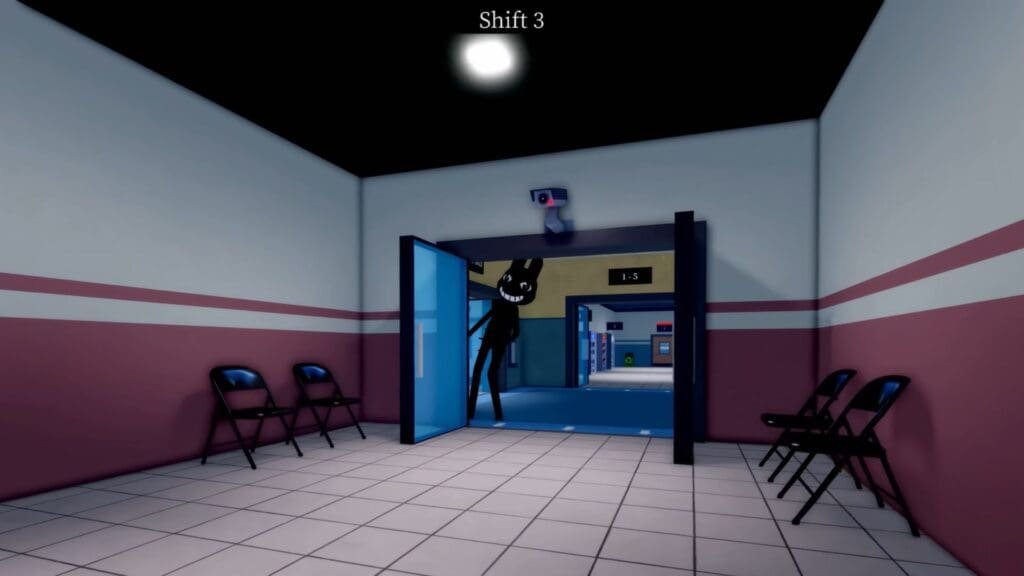
Shift difficulty breakdown
Learn the baseline
The game teaches patient admission, basic anomaly spotting, and the treatment rooms. Threats are minimal and the pace is forgiving. Use these shifts to memorize the counter table and build the photo-before-register habit.
Photo & paperwork checks
Photo and paperwork checks join the desk routine. Still manageable solo if your sanity management is solid. This is the last tier where a single skilled player can comfortably clear every shift.
Hazards & the Stalker
Environmental hazards and the Stalker arrive, and the desk workload gets heavy. Split desk and camera roles in co-op — one player runs the reception desk while another watches the cameras and handles rooms. Solo play is possible but punishing.
Co-op required
Demands co-op role splits and weapon readiness. Skinwalker spawns are more frequent, so keep a taser or gun on hand. A well-coordinated team clears these; a solo player usually does not.
Solo vs co-op: when to switch
Solo play holds up cleanly through Shift 6. From Shift 7 onward, the combination of desk workload, camera checks, roaming hazards, and the Stalker makes it much safer to bring a second player.
Solo (Shifts 1–6)
- Manage your own desk, cameras, and rooms
- Keep coffee stocked — you are the only sanity pool
- Reject aggressively when overwhelmed
Co-op (Shift 7+)
- One player runs the desk and check-in checks
- One player watches cameras and runs treatment rooms
- Keep a weapon carrier ready for Skinwalker spawns
Role split in co-op
The single most effective co-op setup is to split duties by location, not by task. One player owns the reception desk — running the three checks, rejecting anomalies, and calling out real patients. The other player owns the back — sweeping cameras, treating patients in rooms, and responding to emergencies. This way the desk is never abandoned during a surgery, and the camera operator catches anomalies the desk player would miss while busy.
From Shift 10, add a third role informally: a weapon carrier who stays mobile and responds the moment a Skinwalker spawns. With up to 30 players per server, larger groups can staff the desk, cameras, rooms, and response separately.